
There has been an attack. Several uniformed rescue forces can be seen at an overturned public bus. They are crouching next to an unconscious, seriously injured pedestrian and giving first aid. The situation is critical, every second counts. Some oncoming cars appear on the busy street. Screeching tyres and horns can be heard. And screams. The whole scene is accompanied by flickering blue lights and the deafening wail of sirens. The paramedics check the patient’s vital signs, frantically discuss the situation, and hastily exchange information. The stress and tension can be seen in their faces. They decide to contact headquarters as soon as possible: important instructions and further support are urgently needed. Especially since it is not clear where the terrorists are, whether they are still here or whether they might return. The situation is hardly predictable, difficult to control. Human lives are in danger.
In such a critical situation, every move, every piece of information and the perfect interaction of the emergency forces are of decisive importance.
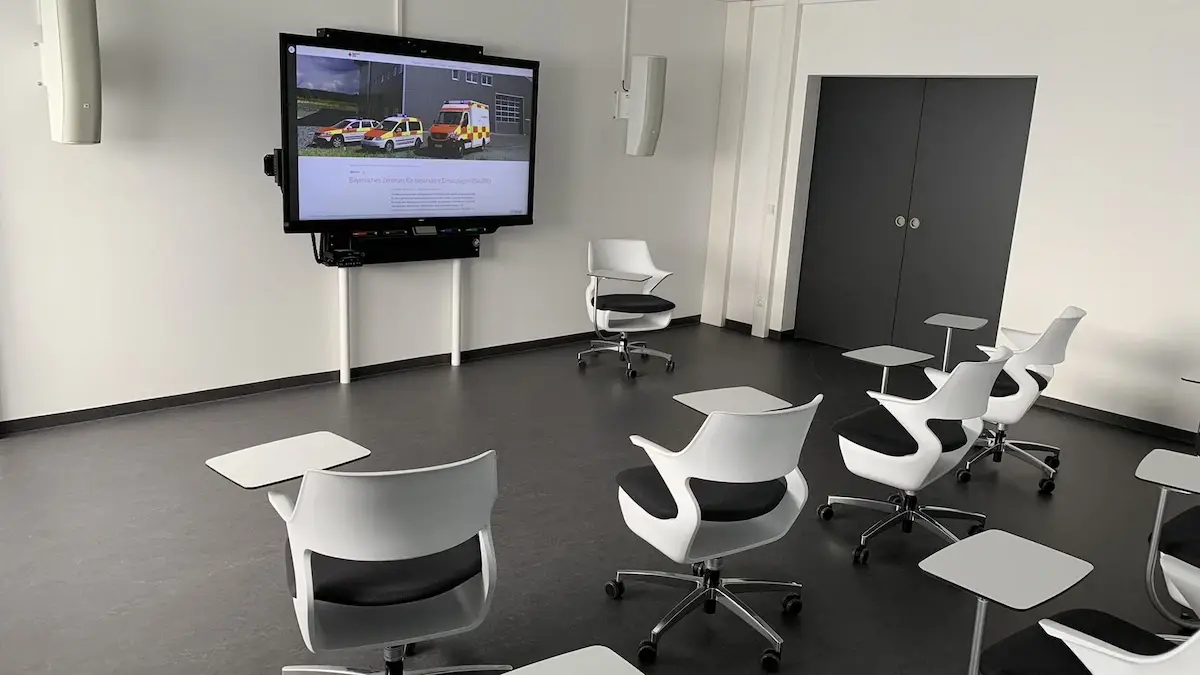
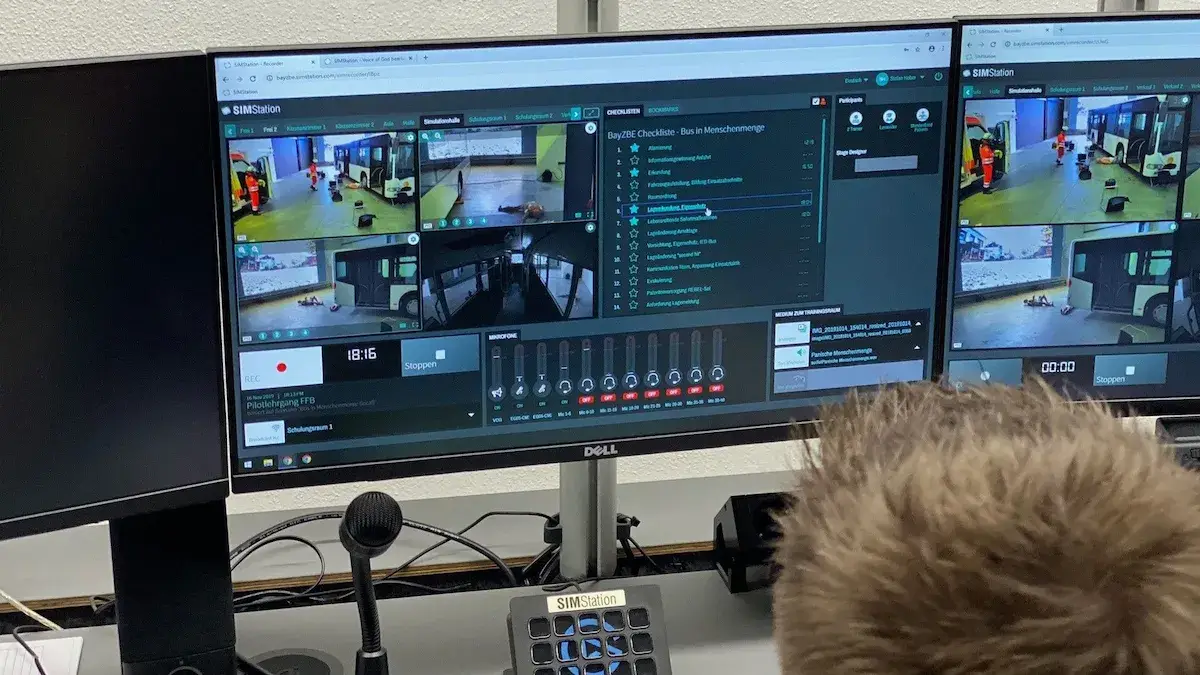
Cut. We now see a group of people sitting in a semicircle watching the described scenario via a smartboard. And despite the drastic events that are pictured on the screen, they remain quite calm, observe what is happening, take notes and discuss what they have seen. The images seem to interest them more than they disturb them. But why? Because it is not real. Although it does seem so real. It is a video recording. More precisely, it is a recording of a simulation training that took place hours before. We are in a debriefing room where a terror simulation exercise is being reviewed. The screen of the smartboard comprises several sections, each showing different perspectives of the event. Using a tablet, the instructor stops or speeds up the recording as needed, changes the video and/or audio tracks and jumps to previously made annotations and notes. The participants of the debriefing can thus view, measure, discuss and evaluate all aspects of the recorded simulation training in detail – every movement, every procedure, every communication. This is how disaster control training works in the 21st century.In such a critical situation, every move, every piece of information and the perfect interaction of the emergency forces are of decisive importance.
The cooperation between BayZBE and SIMStation began with a project tender, which SIMStation won in 2018. The original order was to integrate a complex AV system into the building of the planned center. Over time, this task has evolved into a long-term partnership with the ambitious goal of continuously implementing new and innovative developments and thus advancing simulation technology. The collaborative realization of the highly motivated project covered all aspects of the project, from consulting and planning to installation, commissioning, and maintenance. Today’s result (further developments are planned!) represents one of the most extensive SIMStation installations in the world to date: a completely customized AV system, consisting specifically of an individually set-up SIMStation Enterprise and a fully compatible and mobile SIMStation Pro Gen 2. Several freely configurable stations for simulation, control (partly mobile) and debriefing can be intelligently networked via the SIMNet and thus individually combined and used. In particular, the possibility of the flexibly adaptable AV system guarantees numerous application possibilities that can be carried out fast and easily. The basic idea: Just plug in and simulate!
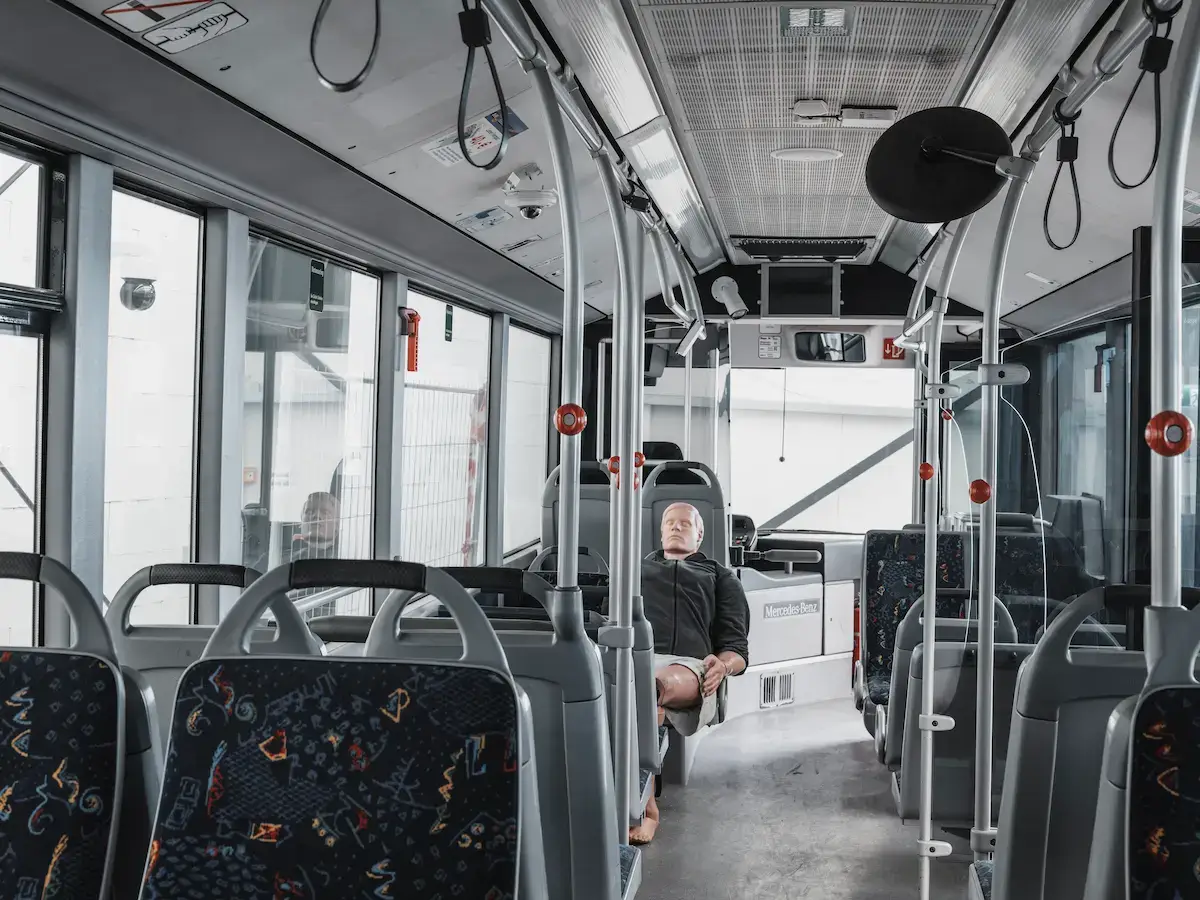
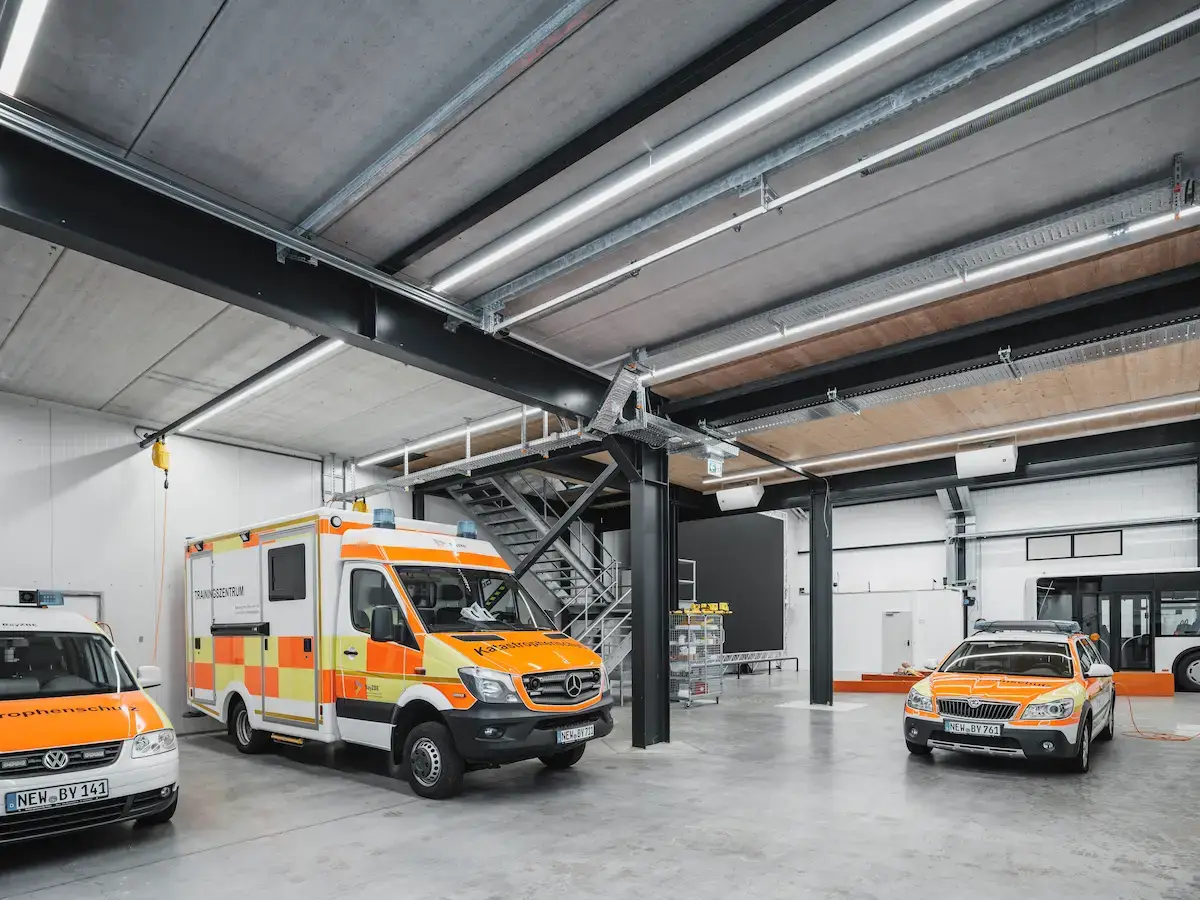
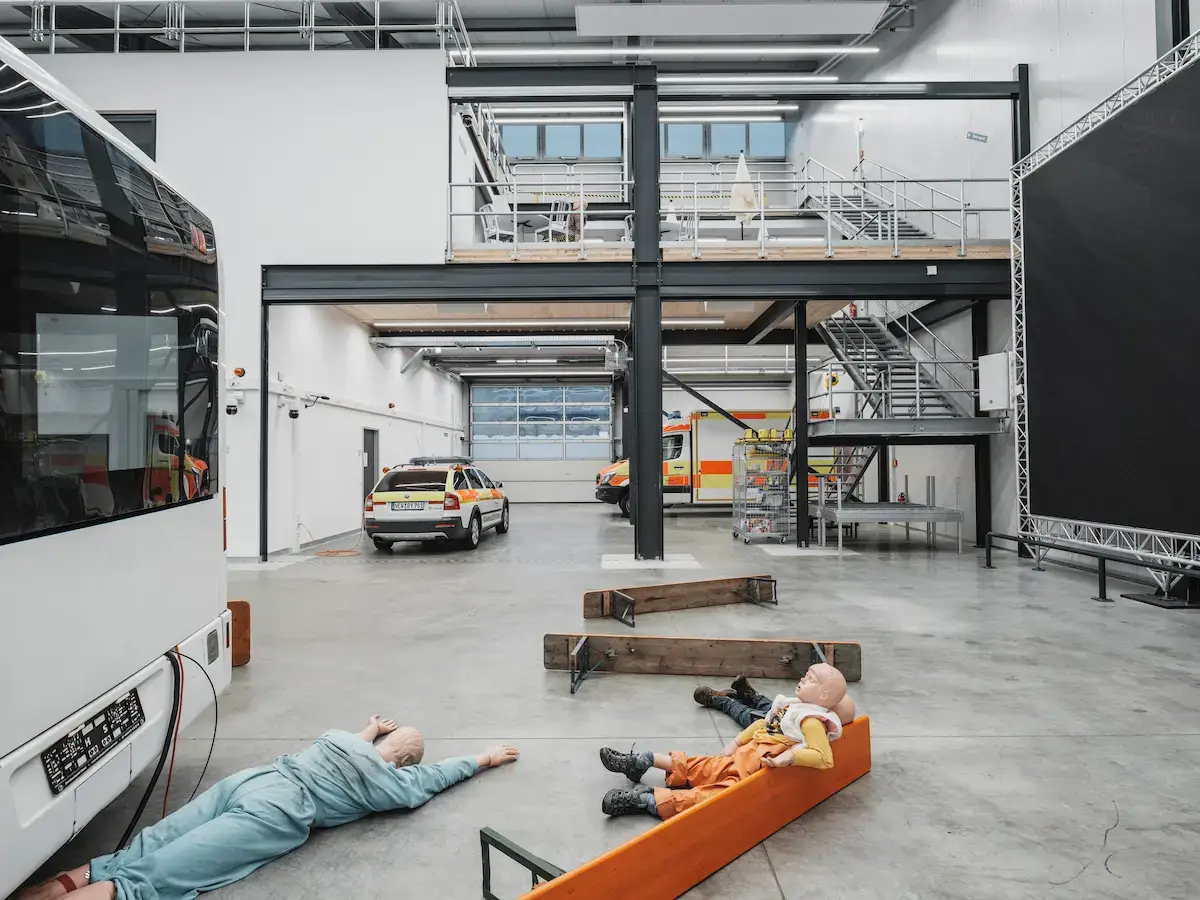
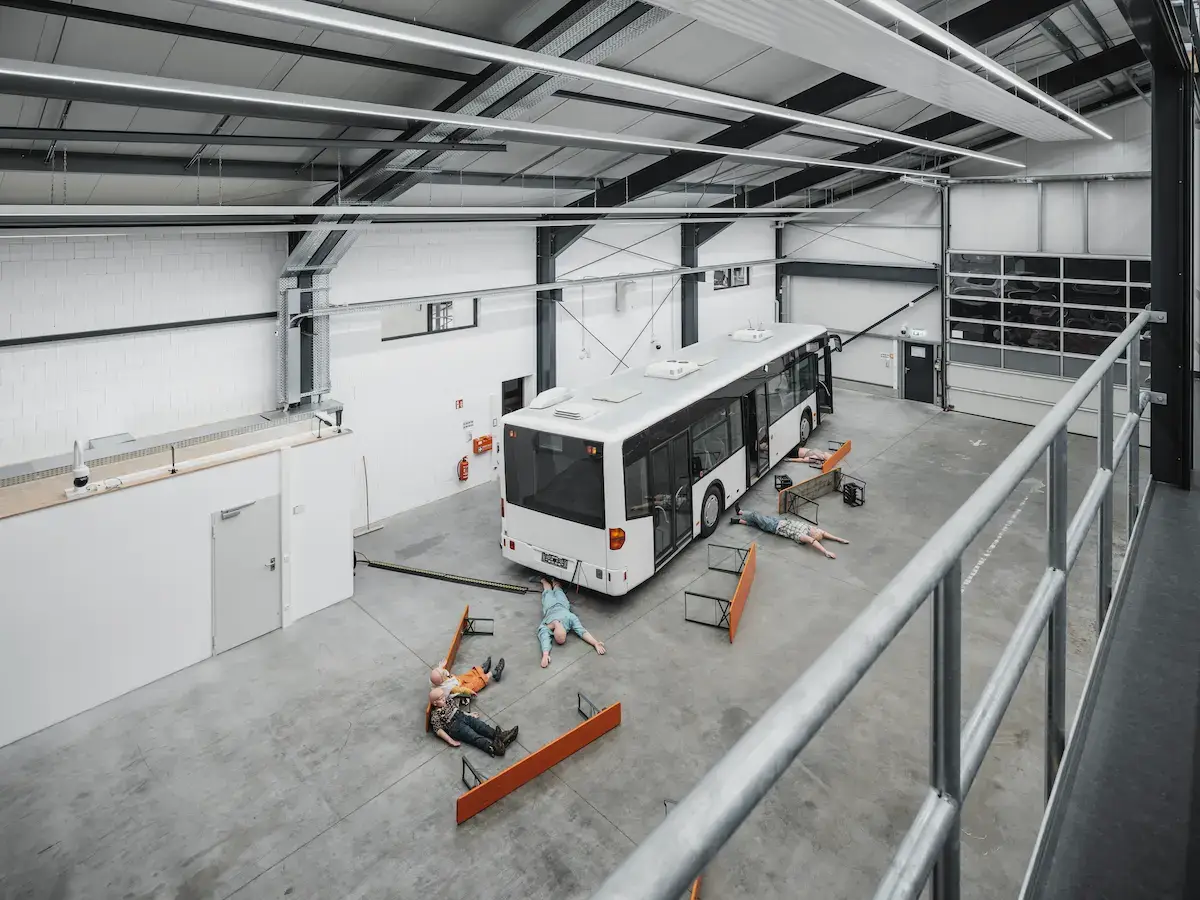
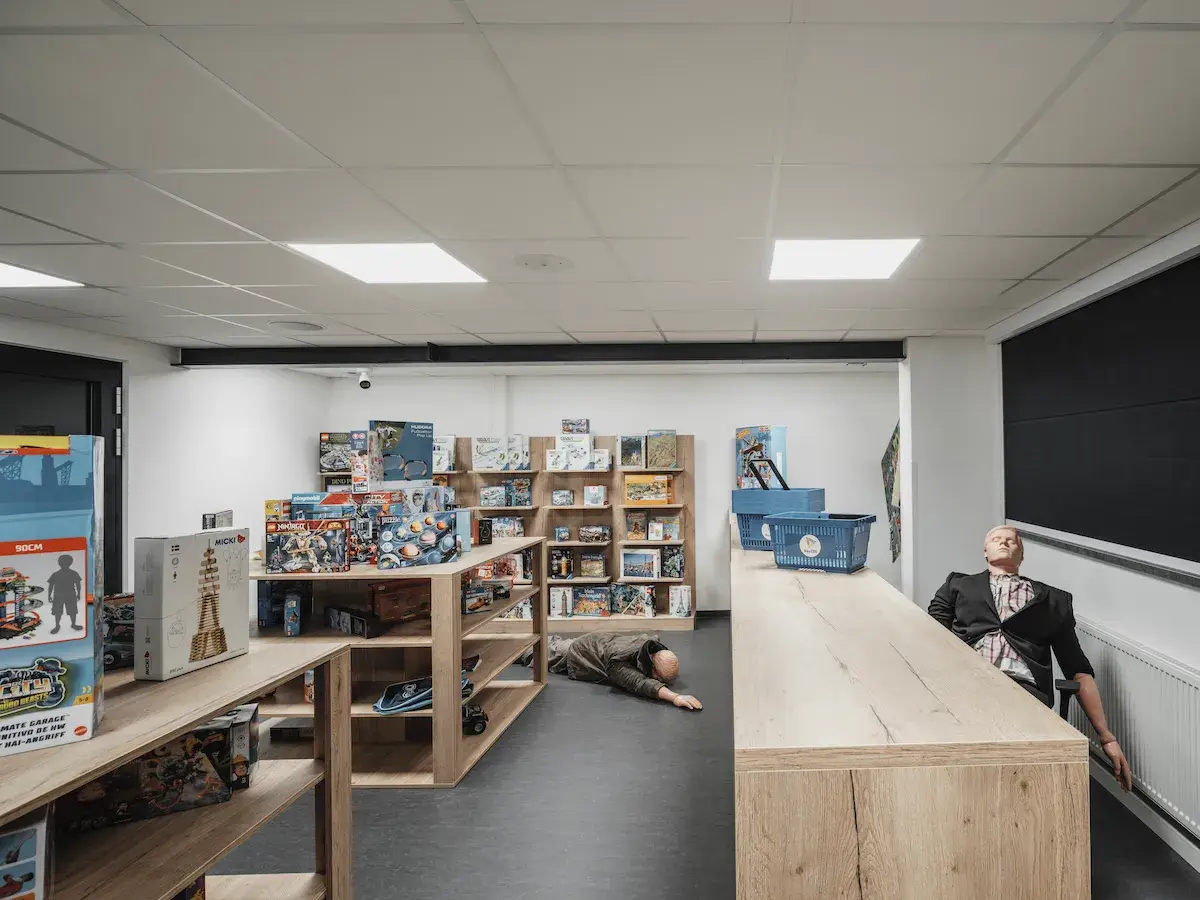
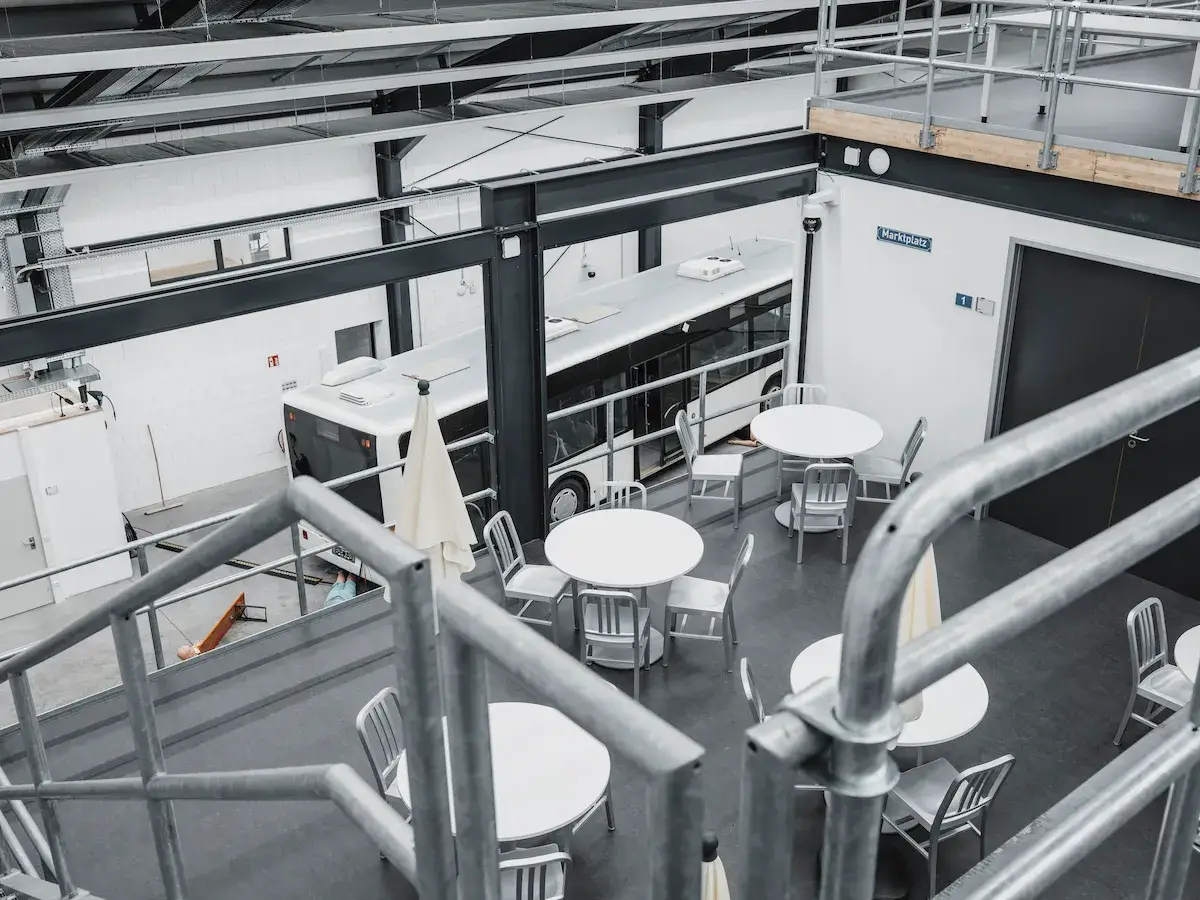
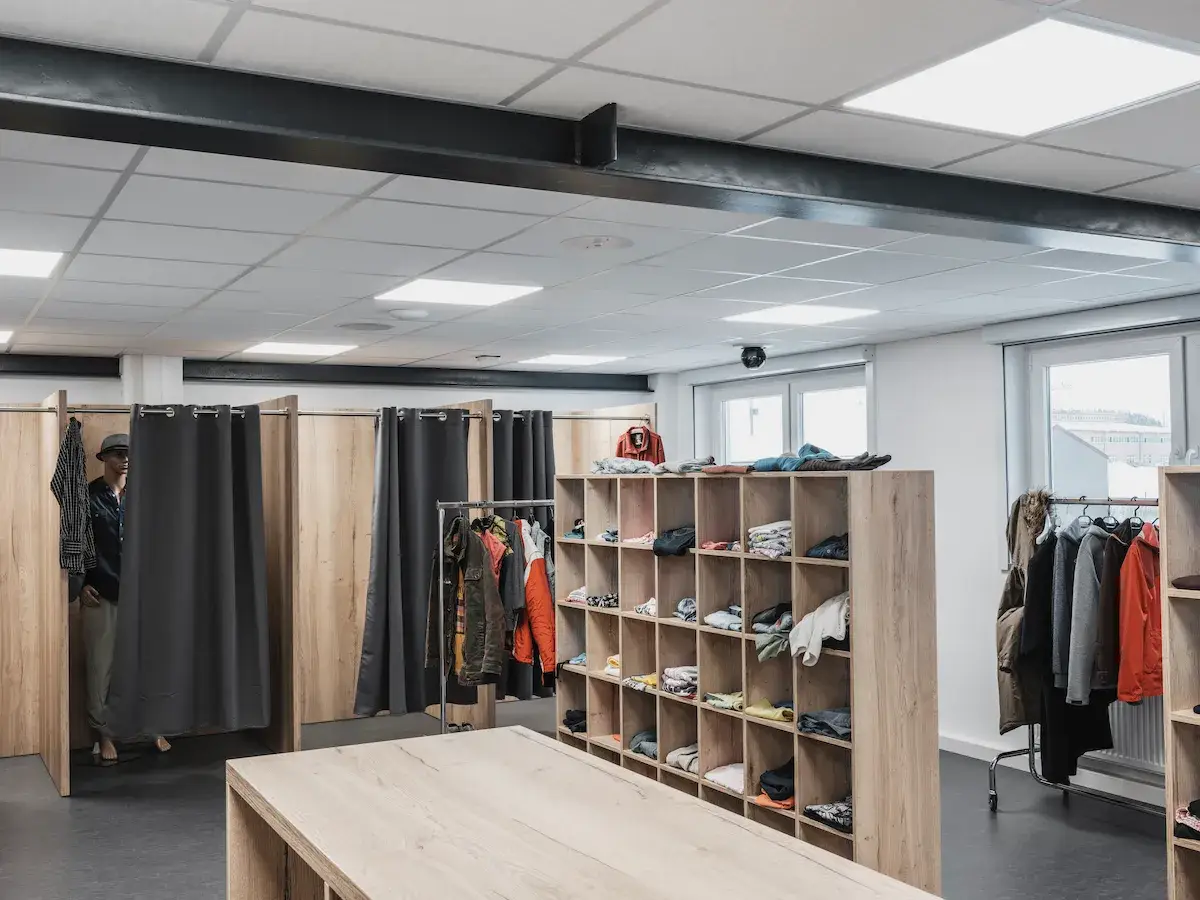
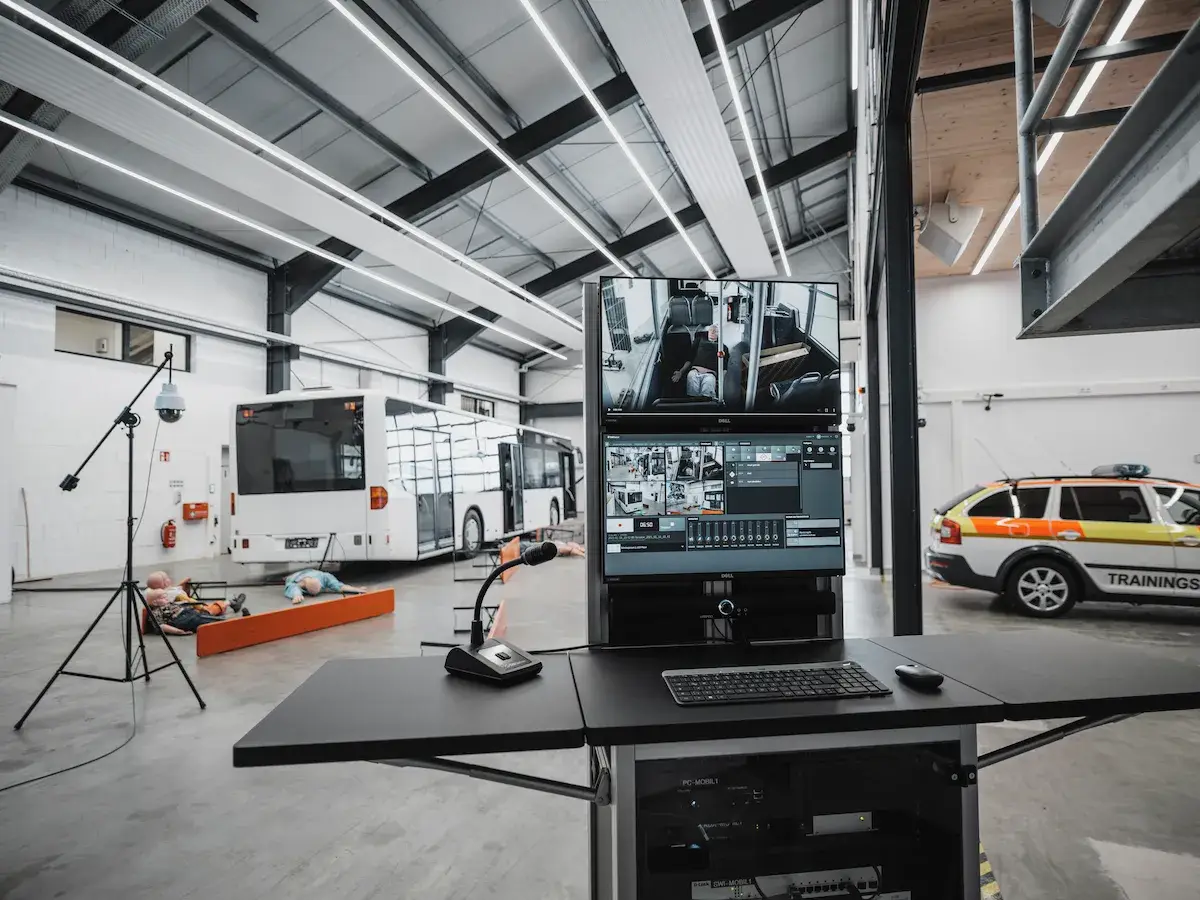
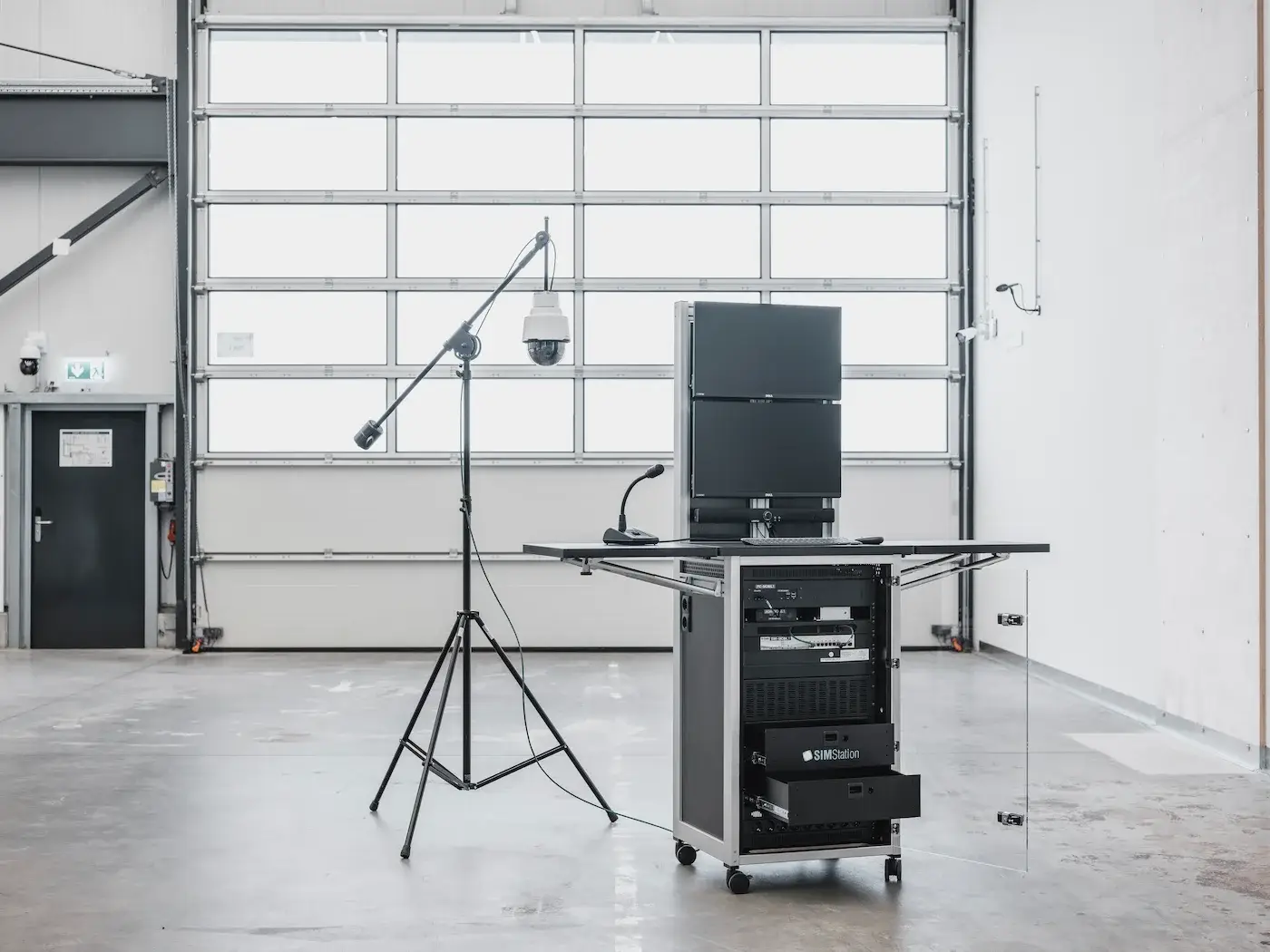
High-end AV hardware enhances not only recording but also the realism of simulation scenarios.
Wall-mounted loudspeakers in all rooms create immersive soundscapes, from ambient noise to live trainer instructions.
A large-scale LED screen (8.0 × 4.5 m) delivers highly realistic visual simulation environments.
Vehicles such as buses and ambulances are fully integrated into the simulation setup.
Axis cameras, microphones, and speakers ensure complete audiovisual coverage across all settings.
Combined with structured debriefings, these immersive scenarios maximize learning outcomes.
By the way: You can also find more valuable insights about the BayZBE – especially about the camera technology used – in the case study by our partner Axis. Enjoy the reading!
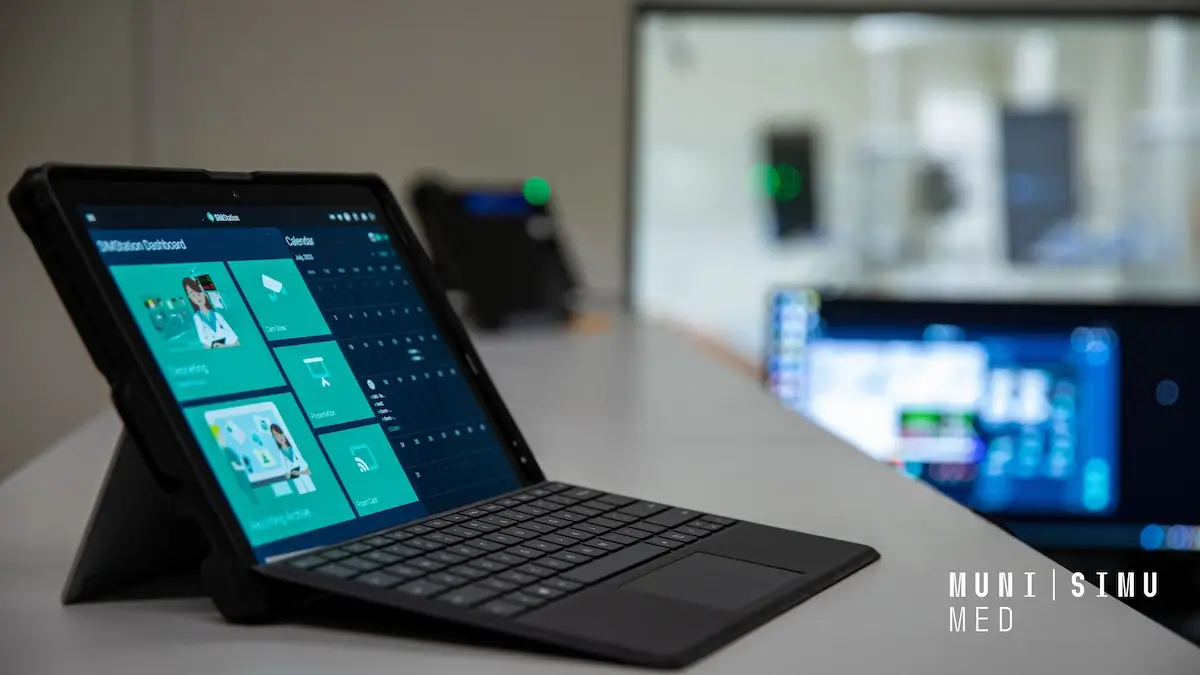

Permanently installed systems for simulation centers, training rooms, and complex multi-room environments – reliable, powerful, and seamlessly integrated into existing infrastructures.