
To prepare teams for preclinical emergencies, training must move beyond the classroom and into real-world environments. SIMStation’s mobile AV systems make this possible.
With their lightweight, portable design, they enable immersive simulation training exactly where emergencies occur. Instructors can recreate realistic, high-pressure scenarios with full audiovisual coverage, live control, and integrated debriefing capabilities – no matter the location.
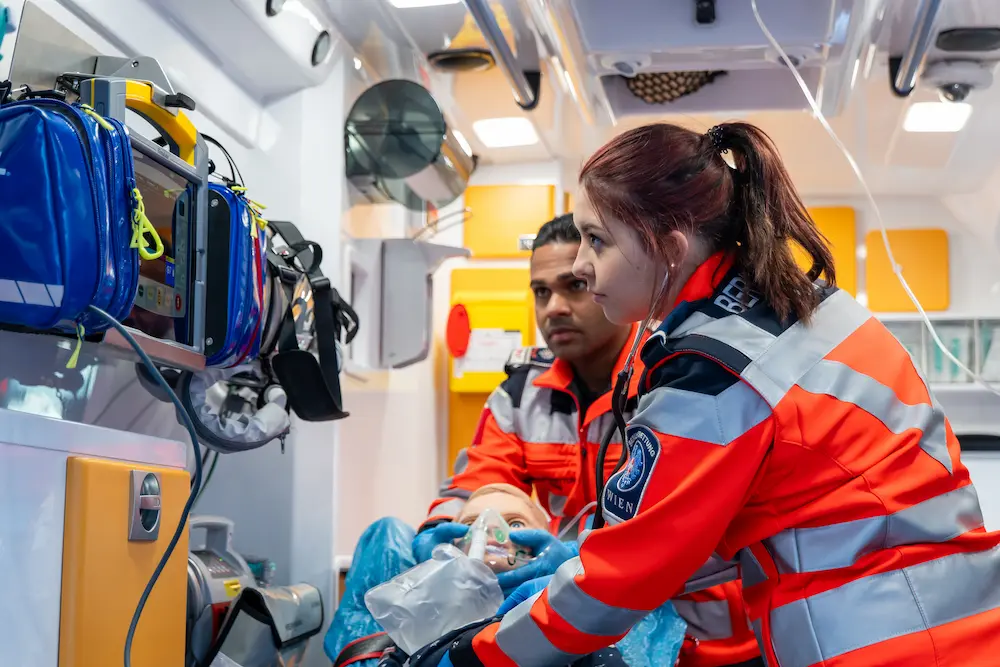
Bring simulation training directly to real-world environments. SIMStation’s mobile system allows teams to train at the scene – without fixed infrastructure.
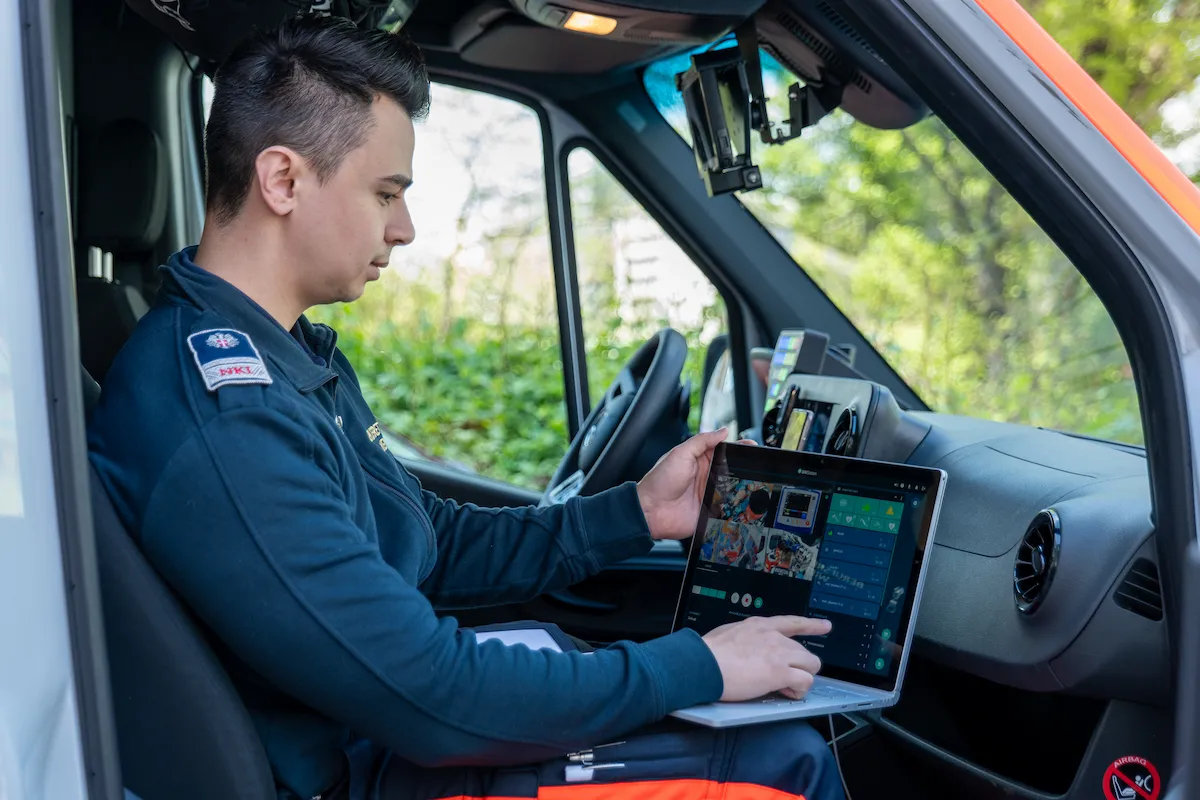
All components are integrated into one mobile system and can be deployed quickly. Start simulation sessions without complex installation or long setup times.
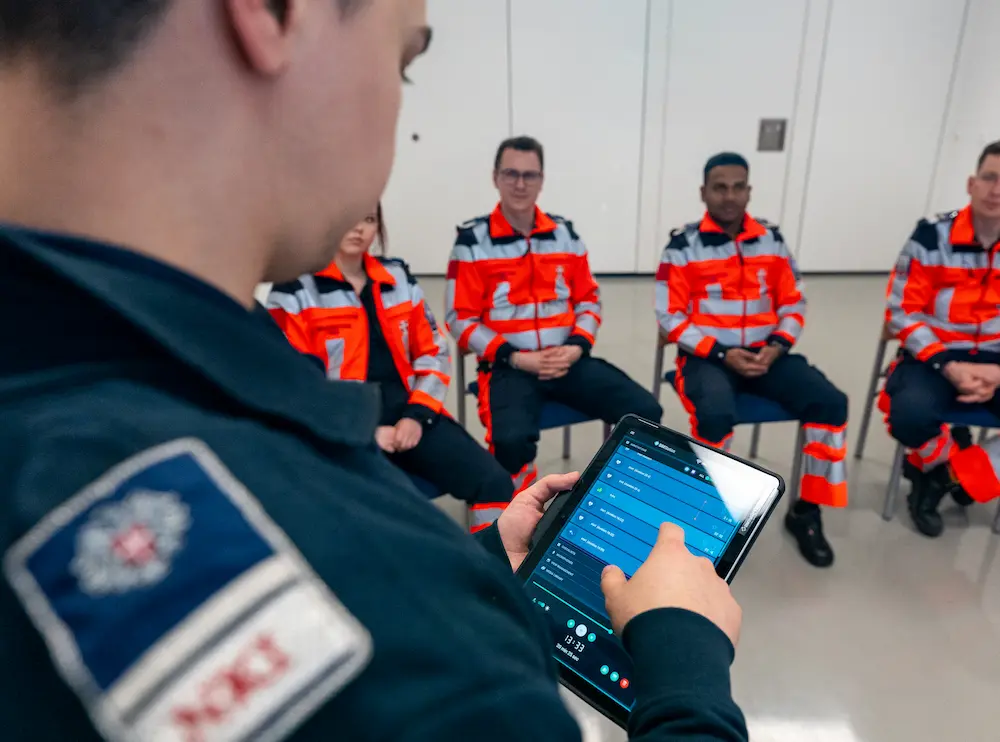
Run advanced training sessions with full audiovisual recording, live control, and structured video debriefing capabilities.
Cameras, microphones, control interfaces, and debriefing tools – everything you need in one portable system.
SIMStation gives you the tools to train effectively in the environments that matter most. Fully mobile. Technically reliable. And always focused on what counts – improving performance when it matters most.
Preclinical simulation prepares preclinical teams for high-pressure, time-critical situations before they happen in real life.
By practicing scenarios such as trauma, cardiac arrest, or mass casualty incidents in realistic settings, participants strengthen clinical decision-making, communication, teamwork, and technical skills.
Simulation training also allows instructors to identify improvement opportunities without putting patients at risk. Combined with structured video debriefing, preclinical simulation helps emergency medical services improve performance, confidence, and patient safety over time.
Preclinical simulation benefits EMS providers, paramedics, firefighters, HEMS crews, disaster response teams, military medical units, and other emergency responders. By bringing simulation directly to ambulances, EMS stations, hospitals, and incident scenes, teams can train in the same environments where they respond to real emergencies.
This approach increases accessibility, reduces travel and setup time, and supports regular in-situ training with immediate video debriefing. For example, Vienna EMS uses SIMStation across 18 rescue vehicles to deliver routine mobile simulation training, helping teams continuously improve communication, clinical performance, and patient safety.
Preclinical simulation enables EMS teams to practice communication, role coordination, and clinical decision-making in realistic emergency scenarios where every second counts. By training together in high-pressure situations, participants learn to share information effectively, adapt to changing conditions, and make coordinated decisions as a team.
Structured video debriefing allows instructors and participants to review performance, identify strengths and areas for improvement, and reinforce best practices. This continuous feedback process builds confidence, strengthens teamwork, and helps emergency responders deliver faster, safer, and more effective patient care in real prehospital situations.
Preclinical simulation can recreate trauma, cardiac arrest, mass casualty incidents (MCI), pediatric emergencies, and many other high-risk situations. Training scenarios can cover the entire patient journey – from the accident scene and ambulance transport to emergency department handover.
This enables EMS teams and healthcare professionals to practice clinical procedures, communication, leadership, and coordinated decision-making in realistic environments. By exposing participants to a wide range of emergency scenarios, simulation training builds confidence, strengthens teamwork, and helps improve patient care before real-life situations occur.
Yes. Preclinical simulation can be conducted in a wide range of real-world environments, including accident scenes, EMS stations, hospitals, ambulances, and other clinical settings. Mobile and in-situ simulation allows teams to train where they work, creating realistic scenarios without the need for a dedicated simulation center.
Portable simulation systems, such as SIMStation’s mobile solutions, enable rapid setup and integrated video debriefing directly on site. This allows instructors to review recorded scenarios immediately after training, reinforce key learning points, and help teams continuously improve communication, decision-making, and overall performance.
Video debriefing is one of the most valuable parts of preclinical simulation because it allows participants to objectively review their performance immediately after a training session. By replaying key moments, teams can analyze clinical actions, communication, leadership, and decision-making in a structured and supportive learning environment.
Instructors can highlight strengths, identify opportunities for improvement, and reinforce best practices using synchronized video, audio, and patient monitor data. This continuous feedback process strengthens teamwork, builds confidence, and helps EMS professionals transfer lessons learned into safer, more effective patient care during real prehospital emergencies.
Modern audiovisual (AV) solutions play a key role in preclinical simulation by capturing every aspect of a training scenario. Multiple synchronized camera angles, microphones, patient monitor data, and other simulation inputs provide instructors with a complete picture of team performance. This creates a reliable foundation for structured debriefing, objective feedback, and continuous improvement.
SIMStation’s integrated AV solution combines synchronized video, audio, and patient monitor feeds in a single platform. Instructors can monitor scenarios live and review complete recordings from multiple perspectives during debriefing, ensuring that critical actions, communication, and clinical decisions are accurately documented to support better learning outcomes.
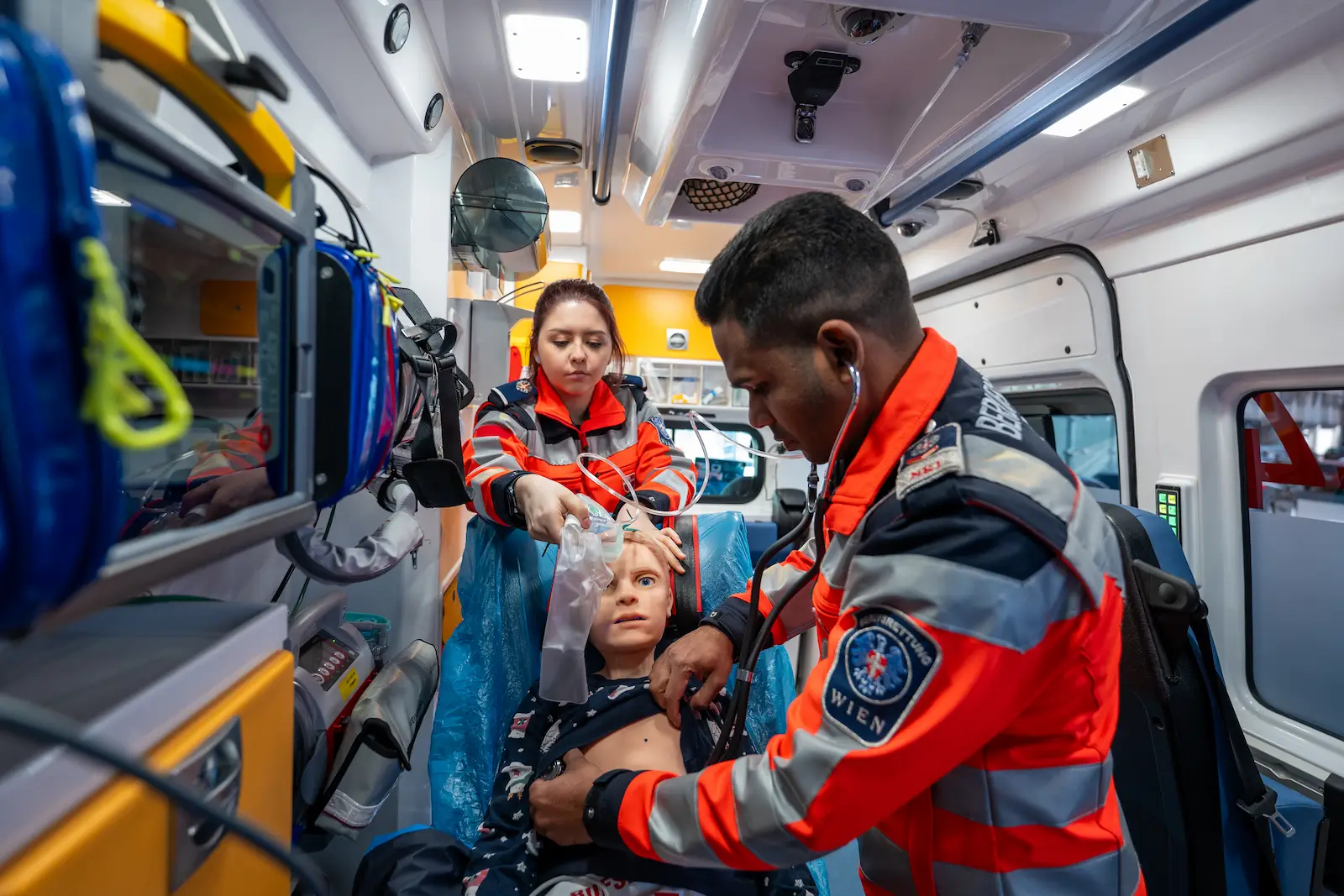
In addition to active operation, 18 new rescue vehicles of EMS Vienna (=Emergency Medical Services) can be used for video-based simulation training at any time.