
Disasters don’t follow rules. Whether mass casualty events, natural disasters, or large-scale system failures – these situations demand fast decisions, clear communication, and seamless teamwork under extreme pressure.
To prepare teams for these challenges, training must go beyond theory and recreate the complexity of real-world operations. With SIMStation’s mobile AV systems, disaster simulations can be recorded, monitored, and reviewed in detail – enabling structured debriefings and more effective team training.
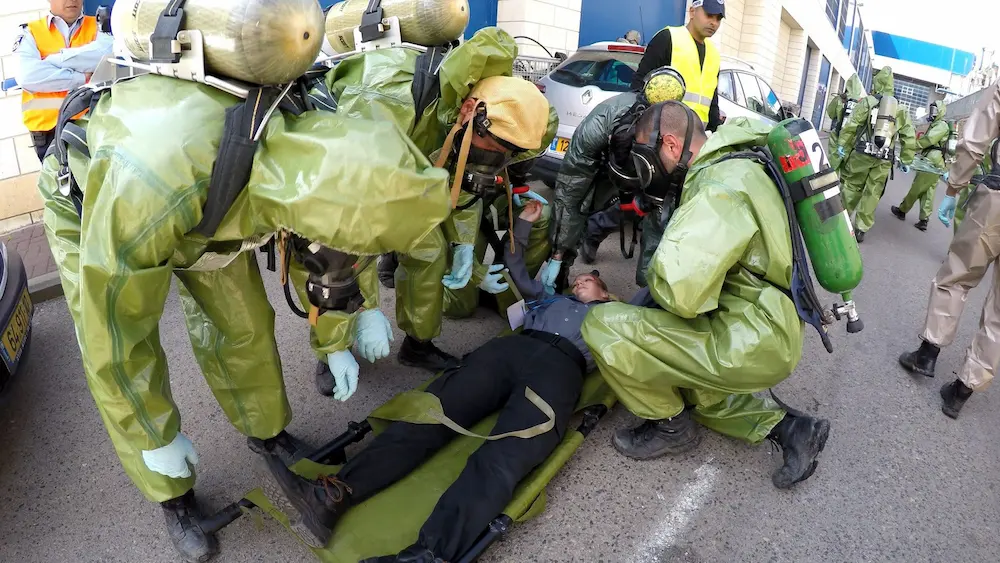
Prepare teams for chaotic, high-pressure disaster scenarios. Simulation allows responders to rehearse coordination, communication, and decision-making before real emergencies occur.
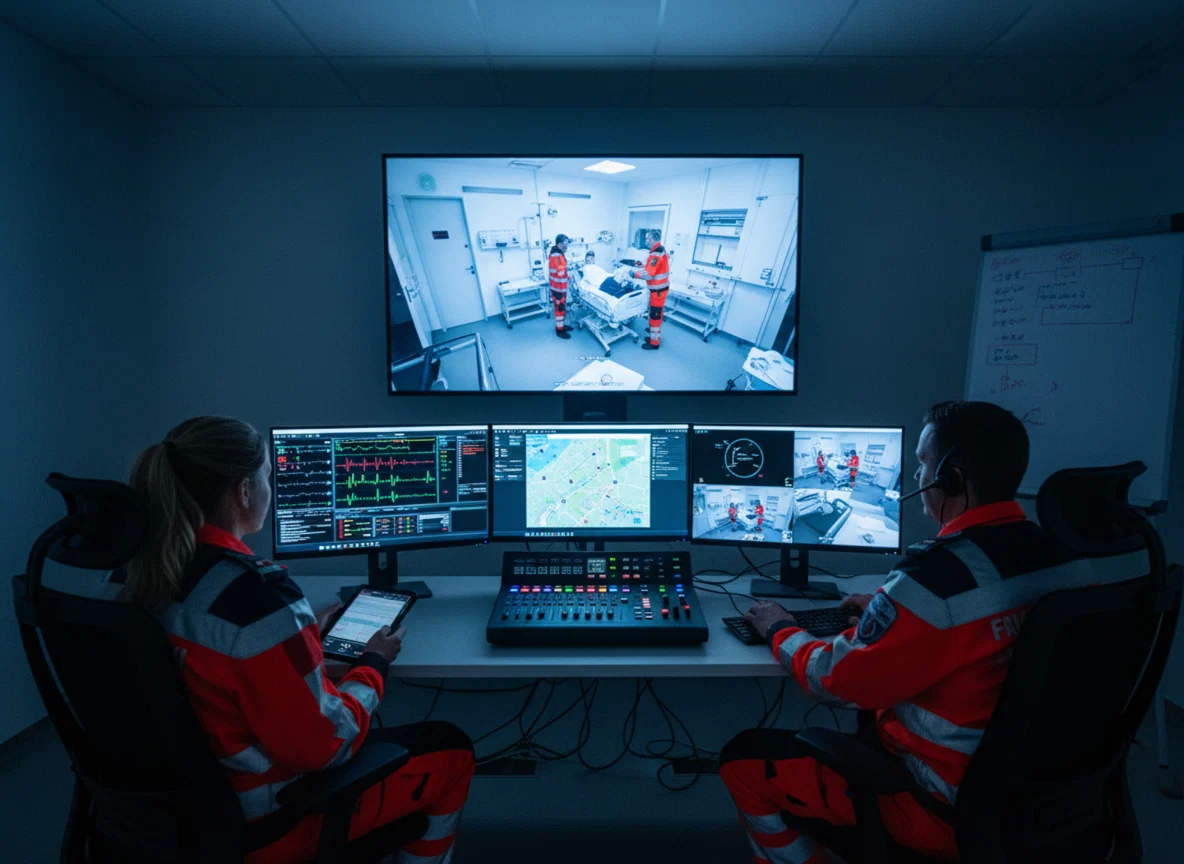
Train multiple teams and roles in realistic disaster scenarios. SIMStation enables clear observation and coordination across large-scale simulation environments.
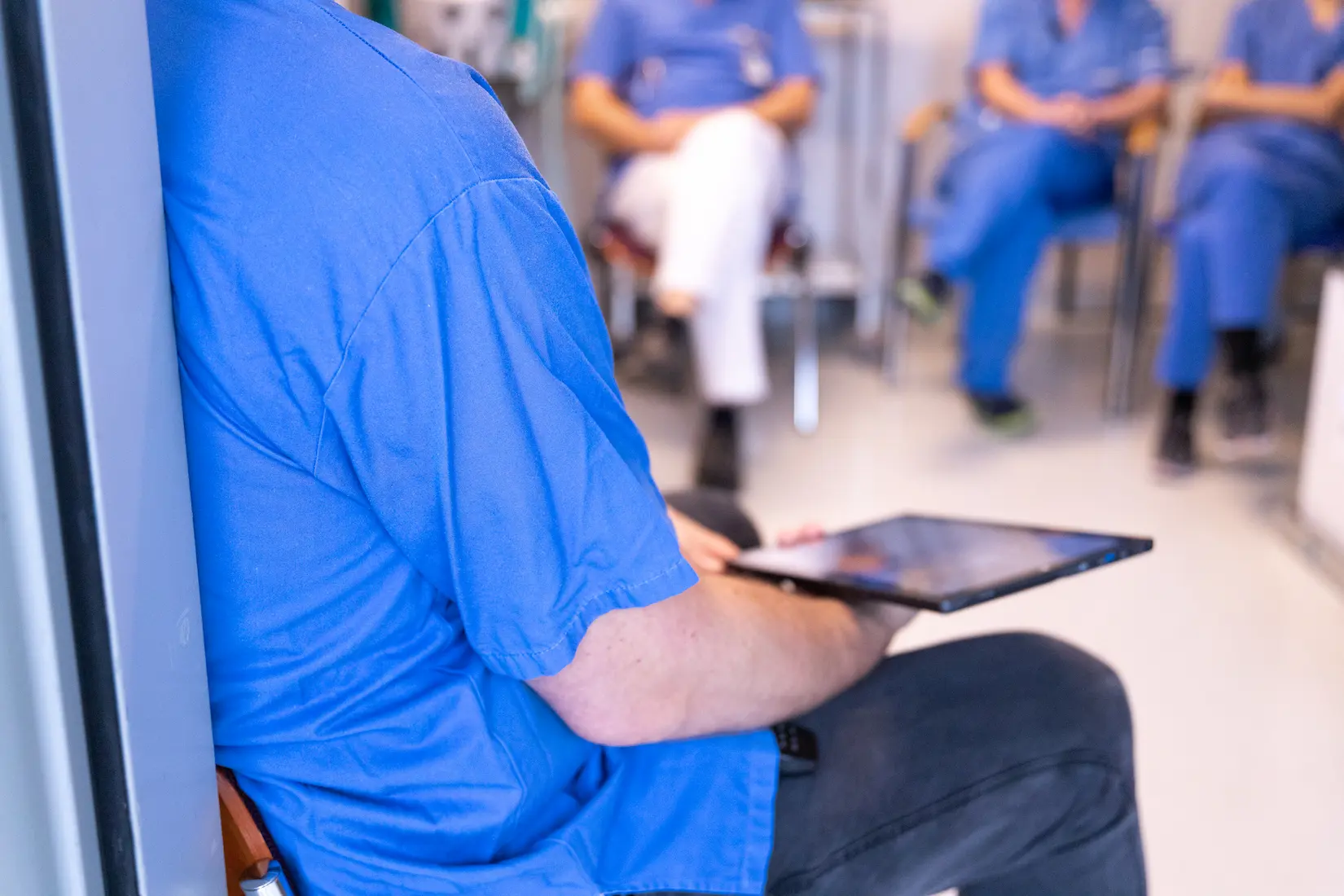
Record simulations and analyze them in structured video debriefings. Teams can reflect on decisions, communication, and workflows to continuously improve disaster response.
Simulation allows emergency response organizations to train for complex major incidents without putting people or infrastructure at risk. Teams can practice medical care, communication, command structures, and interagency coordination under realistic and time-critical conditions.
Regular training helps organizations review procedures, clarify responsibilities, and identify potential weaknesses before a real emergency occurs. This allows response plans to be refined and teams to prepare more effectively for rare but particularly critical situations.
Disaster response simulations can cover mass casualty incidents (MCI), major accidents, natural disasters, evacuations, fires, technical emergencies, and complex rescue scenarios.
Depending on the training objectives, exercises can focus on individual phases or simulate an entire response – from initial situation assessment and triage to medical care and coordination between multiple emergency response organizations.
Disaster response often requires close coordination between EMS, fire departments, police, public authorities, hospitals, and other organizations. Simulation provides a shared training environment where teams can practice communication, roles, responsibilities, and decision-making under realistic conditions.
Joint exercises help participants better understand organizational interfaces, test communication pathways, and establish coordinated procedures. This supports effective collaboration when multiple teams and organizations need to work together during a real incident.
Disaster response exercises can be documented using synchronized video and audio recordings. Depending on the training setup, multiple camera perspectives and additional data sources can be captured to provide a comprehensive view of the exercise.
These recordings provide an objective basis for review. Instructors and exercise coordinators can revisit key situations, analyze communication and decision-making, and work with participating teams to identify opportunities for improvement.
Complex disaster response exercises involve many simultaneous decisions, actions, and communication processes. Structured video debriefing makes these moments easier to reconstruct and allows participants to review key situations together after the exercise.
Teams can reflect not only on individual actions but also on organizational interfaces, command decisions, and collaboration between different units. Lessons identified during the exercise can then be incorporated into future training and response planning.
Yes. Mobile simulation technology allows exercises to take place where emergency teams actually operate – for example at EMS stations, hospitals, training grounds, or other realistic deployment locations.
Training in the actual environment makes it possible to incorporate spatial conditions, communication pathways, and existing operational procedures into the exercise. Mobile audiovisual systems can also support on-site recording and subsequent video debriefing.
Planning should begin with clear training objectives: Which operational procedures, roles, communication pathways, or decision-making processes should be tested? Based on these objectives, organizers can define the scenario, participating organizations, locations, schedule, and observation criteria.
For larger exercises, it is also important to consider early on how communication, recording, observation, and evaluation will be supported technically. Structured documentation helps capture lessons learned and apply them to future training and emergency response planning.
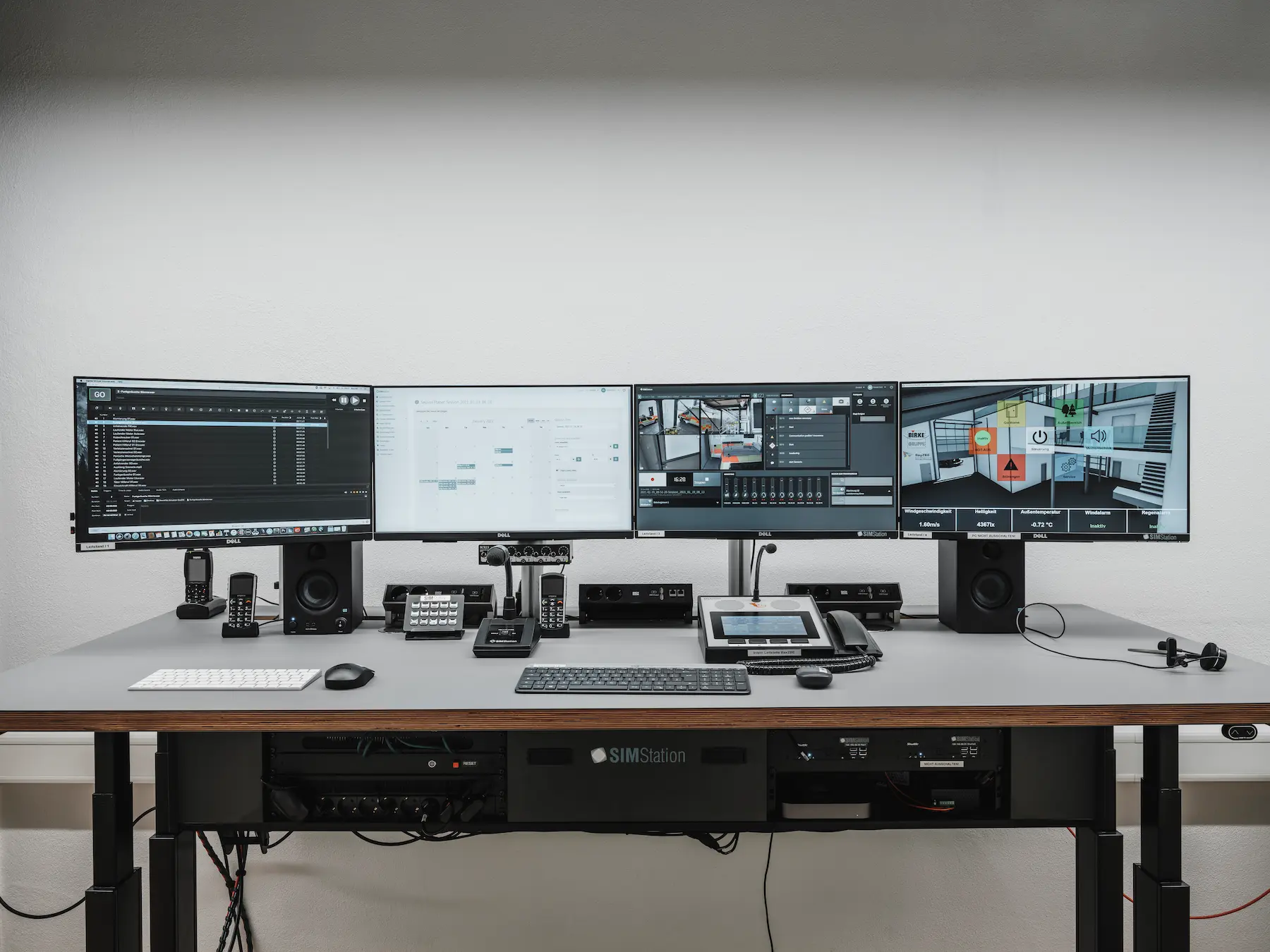
The Bavarian Centre for Special Operations in Windischeschenbach uses video-based simulations to prepare emergency forces for real-life scenarios.