
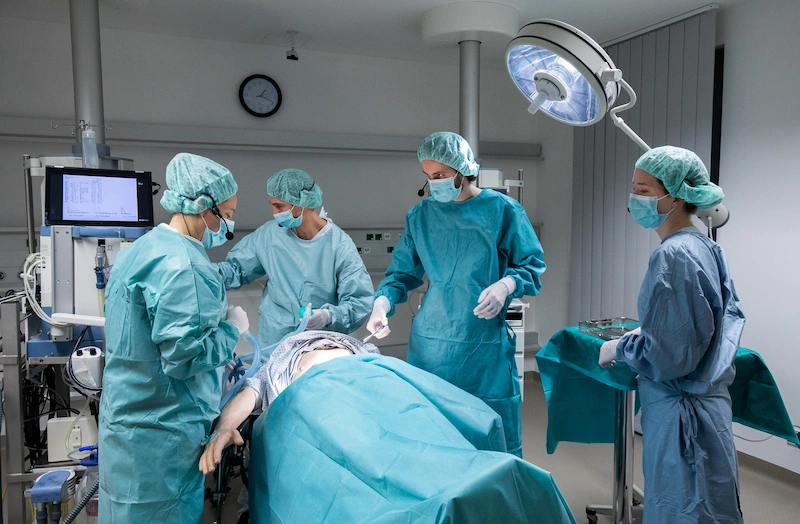
Simulation enables students to apply theoretical knowledge in realistic clinical scenarios. By practicing in a safe, structured environment, they develop practical skills and clinical confidence before working with real patients.
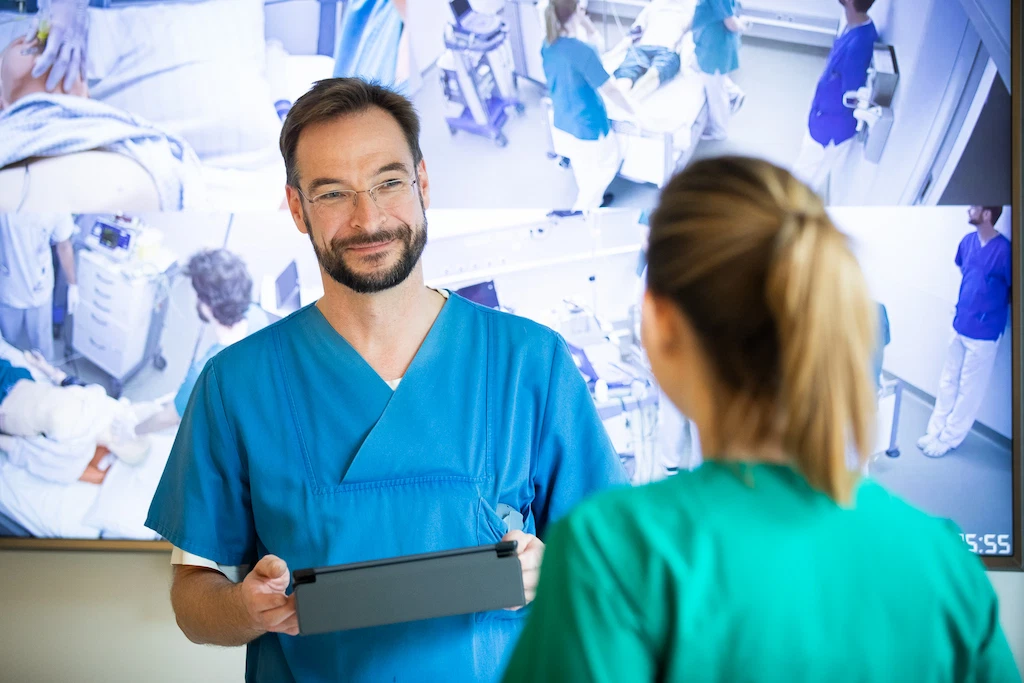
Simulation is not just about practice. Simulation also helps educators assess performance, identify learning gaps, and personalize instruction. With AV-supported simulation by SIMStation, these benefits are taken to the next level.
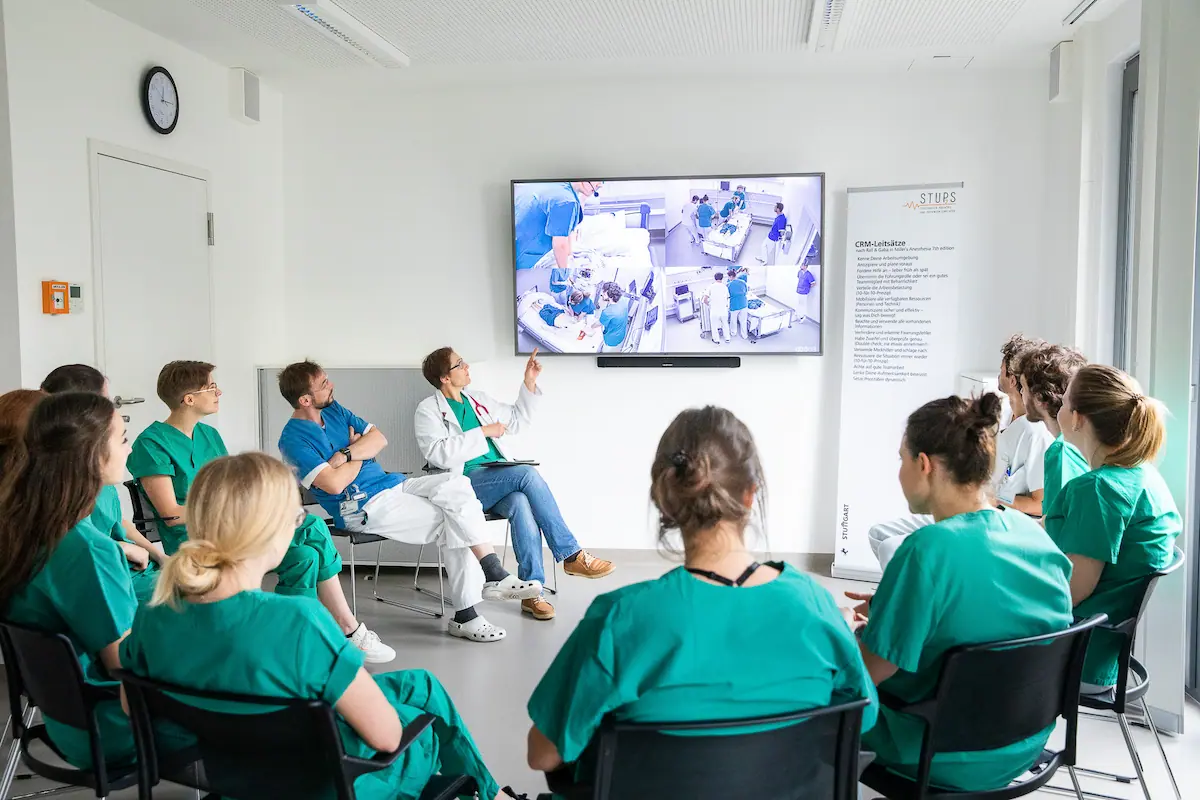
From live observation to detailed video debriefing and performance tracking: AV-based simulation gives you the tools to train smarter, teach more effectively, and ensure medical quality from the very beginning.
SIMStation adapts seamlessly to your curriculum, learning objectives, and available space.
Choose smarter training and more effective teaching from day one.
Medical simulation helps students bridge the gap between classroom learning and real clinical practice. By practicing clinical scenarios in a safe, controlled environment, learners develop clinical reasoning, technical skills, communication, and teamwork before treating real patients.
Simulation also allows educators to create standardized learning experiences, identify performance gaps, and provide structured feedback without compromising patient safety. Combined with video debriefing, simulation helps students build confidence, improve competency, and better prepare for clinical placements and professional practice.
Medical simulation helps students develop both technical and non-technical skills essential for clinical practice. Depending on the learning objectives, participants can practice patient assessment, clinical procedures, decision-making, communication, teamwork, and leadership in realistic healthcare scenarios.
Simulation also encourages critical thinking and the ability to respond effectively under pressure. Through repeated practice and structured feedback, students strengthen their clinical competence, build confidence, and become better prepared for real patient care.
Medical simulation is used throughout healthcare education to complement classroom teaching with hands-on clinical experience. Students practice patient care in clinical skills labs, simulation centers, and interdisciplinary training environments, where they can safely apply knowledge before entering real clinical settings.
Simulation is also widely used for standardized assessments such as OSCEs, team-based training, and competency development. By creating realistic and repeatable learning experiences, educators can support consistent instruction while preparing students for the challenges of clinical practice.
Student performance can be assessed using structured evaluation methods such as checklists, rating scales, and competency frameworks. During simulation sessions, educators observe clinical skills, decision-making, communication, and teamwork to measure learning outcomes consistently.
Digital assessment tools help standardize evaluations, simplify documentation, and make learner progress easier to track over time. Combined with simulation and video review, they provide a transparent and objective foundation for competency-based education.
Video debriefing helps students objectively review their performance after a simulation. By replaying key moments, educators can facilitate structured discussions around clinical decisions, technical skills, communication, and teamwork while encouraging reflection and active learning.
Recorded sessions also provide educators with an objective and reviewable record of each simulation. This creates a consistent basis for feedback, supports learner assessment, and allows important learning moments to be revisited long after the simulation has ended.
AV technology enables simulation sessions to be recorded from multiple perspectives using synchronized cameras, microphones, and medical device feeds. This allows educators to observe scenarios live, capture and annotate important learning moments, and create high-quality recordings for later review.
Integrated AV systems also simplify simulation management workflows by centralizing planning, control, recording, and reporting in one integrated platform. This helps educators focus on teaching while providing learners with consistent, objective feedback based on recorded performance.
Yes. Simulation technology is widely used to support Objective Structured Clinical Examinations (OSCEs) and clinical skills training. It helps educators manage practical examinations, standardize assessment processes, and create realistic learning environments where students can demonstrate clinical competence.
Integrated solutions can combine exam planning, candidate management, digital scoring, video recording, and performance review within a single workflow. This improves efficiency for educators while providing a consistent and transparent assessment experience for students.
Learn more about digital exams and assessments on our Exams, Assessments & OSCE page.

A fully equipped hospital without real patients? Welcome to SIMU – a unique simulation center in Europe, where medical students are prepared for everyday working life by means of simulation.